

Xiaomi SU7 Ultra: Porsche Performance at 1/3 the Price? 🤯 Technical Analysis
Originally published by Criteria Motor. Complete and structured analysis for in-depth reading.
Xiaomi SU7 Ultra: The Chinese Electric Sedan Challenging Porsche at One-Third the Price?
The global automotive industry faces a schism. For decades, prestige, precision engineering, and elite performance have come at an unnegotiable price, embodied by brands like Porsche. But what happens when a tech giant like Xiaomi, known for democratizing innovation, bursts into this sanctuary with an electric sedan that promises to match or surpass a Taycan at a fraction of its cost? The question is not rhetorical; it’s a structural dilemma shaking the foundations of the luxury market, forcing us to deconstruct the engineering and strategy behind this audacious provocation.
The Digital Gauntlet – Xiaomi’s Foray into High-End Automotive
 Figure 1: Visual detail and technical analysis corresponding to The Digital Gauntlet – Xiaomi’s Foray into High-End Automotive.
Xiaomi, a consumer electronics titan, has declared war on the automotive elite. Its entry into the EV sector is no coincidence but the culmination of a massive diversification strategy, backed by an investment of over 10 billion dollars and the personal commitment of its CEO, Lei Jun.
The SU7 Ultra is presented not just as an electric car, but as an extension of its digital ecosystem. The promise is ambitious: a sedan that not only competes in performance with a Porsche Taycan or a Tesla Model S Plaid but does so with a disruptive value proposition in terms of price.
This audacity demands a forensic analysis. Are we facing a simple “copy-paste” with an aggressive price tag, or has Xiaomi managed to redefine the equation of high-performance automotive engineering and accessibility? The answer lies in the technical details and the mastery of its supply chain.
The challenge is significant. Porsche has perfected its art for almost a century, forging an unbreakable reputation in driving dynamics and quality. Xiaomi, in contrast, is a newcomer with a digital, not automotive, heritage.
However, Xiaomi’s technological capital is immense. They have recruited industry talent, invested in cutting-edge R&D, and bring a “software-first” mindset that could, in fact, be the key to unlocking a new era of performance.
The battle is not just for market share, but for the redefinition of automotive luxury. Is luxury a price tag or an experience of engineering and technology? Xiaomi bets on the latter, with a proposition that demands rigorous technical scrutiny.
Propulsion and Battery Architecture – The Core Engineering Challenge
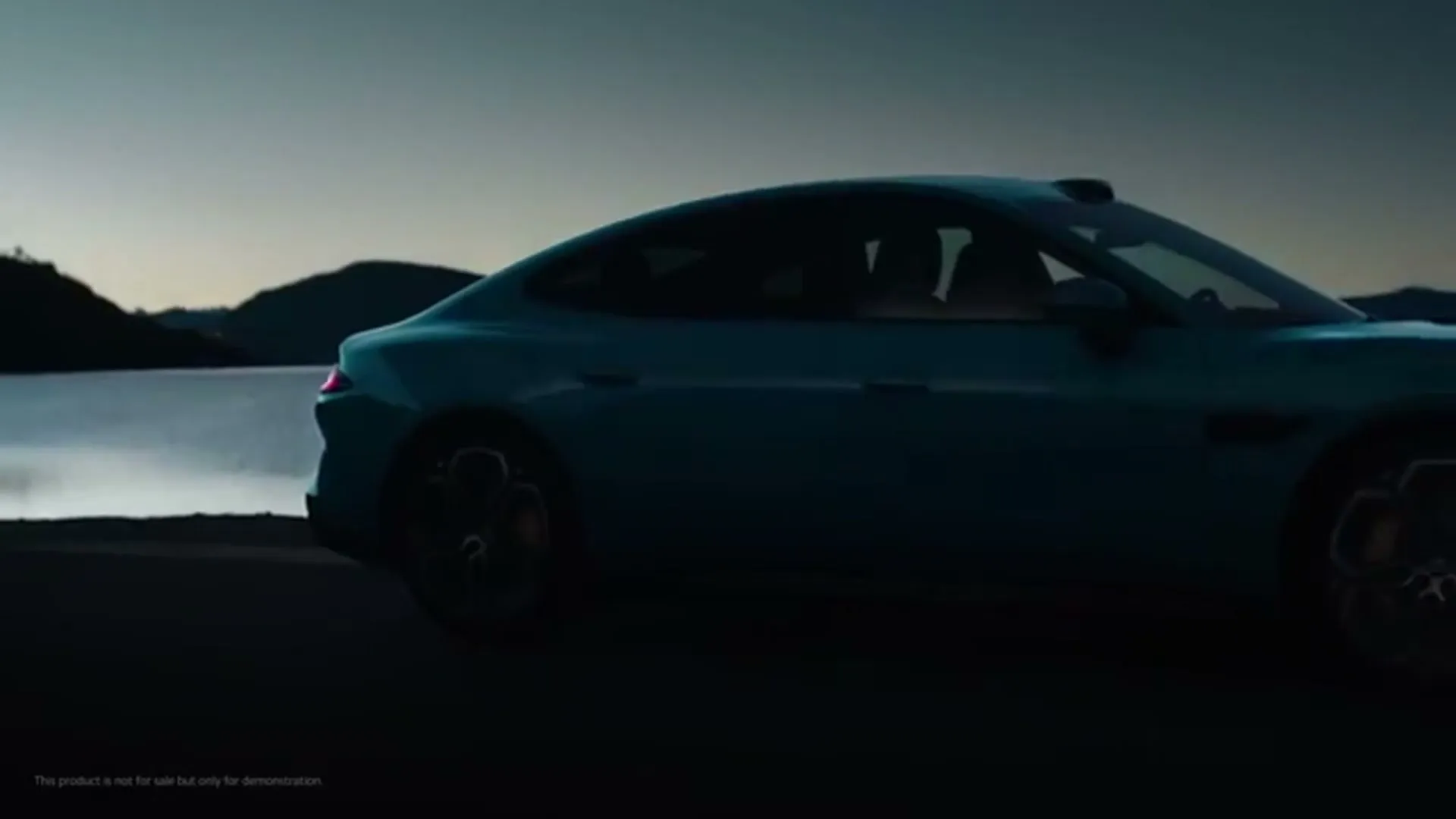 Figure 2: Visual detail and technical analysis corresponding to Propulsion and Battery Architecture – The Core Engineering Challenge.
The core of the SU7’s ambition lies in its powertrain. Xiaomi has developed its own electric motors, the “HyperEngine V6s/V8s,” with an impressive rotation speed of 27,200 RPM for the V8s, even surpassing Tesla’s motors. This allows for exceptional power density.
The 800-volt architecture is another fundamental pillar, similar to that of the Taycan. This technology enables ultra-fast charging and greater energy efficiency, minimizing heat losses and maximizing system performance. Silicon carbide (SiC) inverters are key here.
The battery is the other brain of the system. Xiaomi offers two main configurations: one with CATL (Qilin) cells of 101 kWh and another with BYD (Blade) cells of 73.6 kWh. The Ultra version, with the Qilin battery, promises up to 800 km of range (CLTC).
The Qilin battery chemistry allows for cell-to-pack (CTP) integration, which improves energy density and thermal efficiency. This translates into greater range and extended lifespan, critical factors for consumer confidence in high-performance EVs.
In terms of power, the SU7 Ultra generates 673 hp and 838 Nm of torque, allowing it to accelerate from 0 to 100 km/h in 2.78 seconds. These figures not only rival but in some aspects surpass the Taycan 4S or even approach the Turbo.
Charging capability is equally impressive, with up to 220 km of range recovered in just 5 minutes and 510 km in 15 minutes, thanks to the 800V architecture. This minimizes “range anxiety,” a critical psychological factor for mass adoption.
Aerodynamics and Vehicle Dynamics – Where Physics Doesn’t Lie
 Figure 3: Visual detail and technical analysis corresponding to Aerodynamics and Vehicle Dynamics – Where Physics Doesn’t Lie.
Aerodynamics are fundamental for the efficiency and performance of an EV. The Xiaomi SU7 Ultra boasts a drag coefficient (Cd) of 0.195, an industry-leading figure that surpasses the Taycan (0.22) and approaches the most efficient concept cars.
This achievement is due to meticulous design that includes an active rear spoiler, active grille shutters, and an optimized rear diffuser. Each element works in concert to reduce drag and improve stability at high speeds.
Driving dynamics depend not only on power but also on chassis rigidity and suspension sophistication. The SU7 employs a high-strength aluminum platform and adaptive suspension that includes electronically controlled dampers (CDC) and air suspension.
This configuration allows the vehicle to adapt to different road conditions and driving styles, offering both highway comfort and cornering agility. Torque vectoring and the intelligent all-wheel-drive system are also crucial.
The integration of hardware engineering with software is what truly defines dynamic behavior. Xiaomi’s chassis management system coordinates all these elements to deliver a cohesive and responsive driving experience.
Porsche, with its racing heritage, has mastered this symphony. The question is whether Xiaomi, with its “digital-first” approach, can replicate or even innovate the sense of connection between driver and machine that defines a true sports car.
The Economic Equation and Value Chain – Deconstructing the Price
 Figure 4: Visual detail and technical analysis corresponding to The Economic Equation and Value Chain – Deconstructing the Price.
Price is the most disruptive factor. How can Xiaomi offer a vehicle with these specifications for one-third the cost of a Taycan? The answer is multifaceted and deeply rooted in its business model and the Chinese ecosystem.
First, vertical integration and massive production scale. Xiaomi not only designs its own motors but also has deep expertise in managing global supply chains for electronic components, giving them a cost advantage.
Manufacturing in China offers significant advantages in labor costs and access to a vast network of local suppliers for battery components and semiconductors. This drastically reduces logistics costs and internal tariffs.
Furthermore, Xiaomi may be adopting a “penetration pricing” or even an initial “loss leader” strategy. Its primary goal could be to gain market share quickly, monetizing in the long term through connected services, software, and its digital ecosystem.
Xiaomi’s business model often relies on low hardware margins to drive adoption of its software and services. This could be replicated in the automotive sector, where the lifetime value of the customer can be substantial.
Finally, government subsidies and strategic support from the Chinese state for the electric vehicle industry also play a significant role, although it is difficult to quantify their direct impact on the final consumer price.
Autonomous Driving and Digital Ecosystem – Xiaomi’s Added Value
Beyond the hardware, Xiaomi’s true differentiator is its digital ecosystem. The SU7 is deeply integrated with HyperOS, Xiaomi’s operating system, offering a fluid and connected user experience.
The cockpit is a digital command center, with a 16.1-inch central display and a 7.1-inch instrument panel, plus a head-up display. This provides intuitive access to navigation, entertainment, and vehicle controls.
Regarding autonomous driving, the “Xiaomi Pilot” system is formidable. It employs an NVIDIA Drive Orin chip, two LiDARs, 11 high-definition cameras, 12 ultrasonic radars, and 3 millimeter-wave radars.
This hardware enables advanced Level 2+ driver assistance features (ADAS), such as highway assist, autonomous parking, and assisted navigation in complex urban environments, rivaling industry leaders.
Xiaomi’s ability to integrate advanced chips and develop complex software is an advantage inherited from its core electronics business. This allows them to innovate rapidly in AI and connectivity features.
This digital integration not only enhances the user experience but also enables over-the-air (OTA) updates that can improve performance, add new features, and keep the vehicle up-to-date throughout its lifespan—a model closer to Tesla’s than traditional manufacturers’.
The Engineering and Strategy Verdict
The Xiaomi SU7 Ultra is not merely a competitor; it is a disruptor. Our technical analysis reveals that Xiaomi’s claims are not mere rhetoric. Its powertrain, aerodynamics, and battery technology are genuinely world-class, rivaling and in some aspects surpassing established leaders.
The central dilemma is the price/performance equation. Xiaomi has demonstrated that it is possible to offer high-level engineering at a significantly lower cost, thanks to its manufacturing scale, vertical integration, and the efficiency of the Chinese supply chain.
But is it a “Porsche killer”? Not directly. Porsche sells a heritage, a driving experience, and a status that transcends pure metrics. The SU7 may match or exceed numbers, but the “Porsche feeling” is an intangible that takes decades to forge.
However, the SU7 represents an existential threat to the entry-level luxury segment and to traditional brands that cannot match its value proposition. The strategic lesson is clear: technology and cost efficiency are the new pillars of value in automotive.
The true verdict is that Xiaomi has raised the bar, not only in performance but in the expectation of what can be obtained for a given price. This will force all manufacturers to reconsider their cost structures, their supply chains, and, fundamentally, the value they offer to the consumer.
The Xiaomi SU7 Ultra is more than a car; it is a statement. It is proof that the future of high-performance automotive can be radically more accessible, redefining not only the competition but the very definition of automotive luxury in the electric era.
🚗 Legal Notice & Automotive Technical Disclosure (Automotive Disclaimer):
The content presented in this article is strictly for informational, educational, and automotive technical analysis purposes. Data on range, energy consumption, power, charging times, and mechanical specifications correspond to official homologation sheets and tests under standardized conditions. Actual performance may vary depending on driving habits, topography, ambient temperature, and vehicle condition. Always consult the manufacturer’s manual and the homologated technical sheets for your market.
📺 Watch the Video Analysis
If you prefer to consume this content in audiovisual format with dynamic tests, telemetry, and technical analysis, we invite you to watch our video on YouTube:
-> ▶️ Watch the full video on YouTube
¿Prefieres el análisis en formato audiovisual?
Pruebas a fondo, análisis técnico de ingeniería automotriz y comparativas sin concesiones cada semana.

About Julian Torres
Julian es un entusiasta de la movilidad y de la tecnología, vive la pasión por el campo y disfruta de la paz y la tranquilidad. Antes de ésto, fue Senior Engineer en IBM.
Artículos Relacionados
Ver todos ↗
Xiaomi SU7 Autopsy: Why You'll NEVER See It in Europe? 💸
The Xiaomi SU7 burst onto the automotive scene as a bold statement of intent, promising to revolutionize the electric sedan segment with a value proposition built on cutting-edge technology and competitive pricing. Its Modena platform

Kia EV3: The Phantom Range and Hidden Flaws Nobody Tells You About 👻🔋
The Kia EV3 promises an astonishing 600-kilometer WLTP range, but this video uncovers the uncomfortable truth on the road. We dive deep into why its real-world range often falls short, revealing a significant drop of over 30% at highway speeds.