

Solid-State Batteries: 1000km Range in 10 Minutes? Myth or Reality? ⚡🔋
Originally published by Criteria Motor. A comprehensive and structured analysis for in-depth reading.
Solid-State Batteries: The 1,000 km and 10-Minute Chimera… Reality or Mirage?
The promise is alluring, almost mythical: a thousand kilometers of range and a full charge in just ten minutes. A future where range anxiety and EV charging times are mere memories. This is the vision that solid-state batteries sell us, presenting them as the Holy Grail of electric mobility. But is this vision an imminent destination or a technological chimera that underestimates the relentless laws of physics and economies of scale?
The central dilemma is not whether solid-state batteries are theoretically superior; the question is whether we can manufacture them massively, safely, and at a competitive cost. The leap from the laboratory to the gigafactory is an abyss filled with material, engineering, and supply chain challenges. This is not a software problem, but one of matter itself, of its behavior at the atomic level.
We delve into a forensic analysis of the technology that could redefine the automobile. We will break down the internal architecture, the intricate material challenges, and the economic implications that will determine if this revolution is viable. Prepare for a journey to the heart of battery engineering, where science meets the harsh reality of the market.
Theoretical Promise vs. Material Inertia
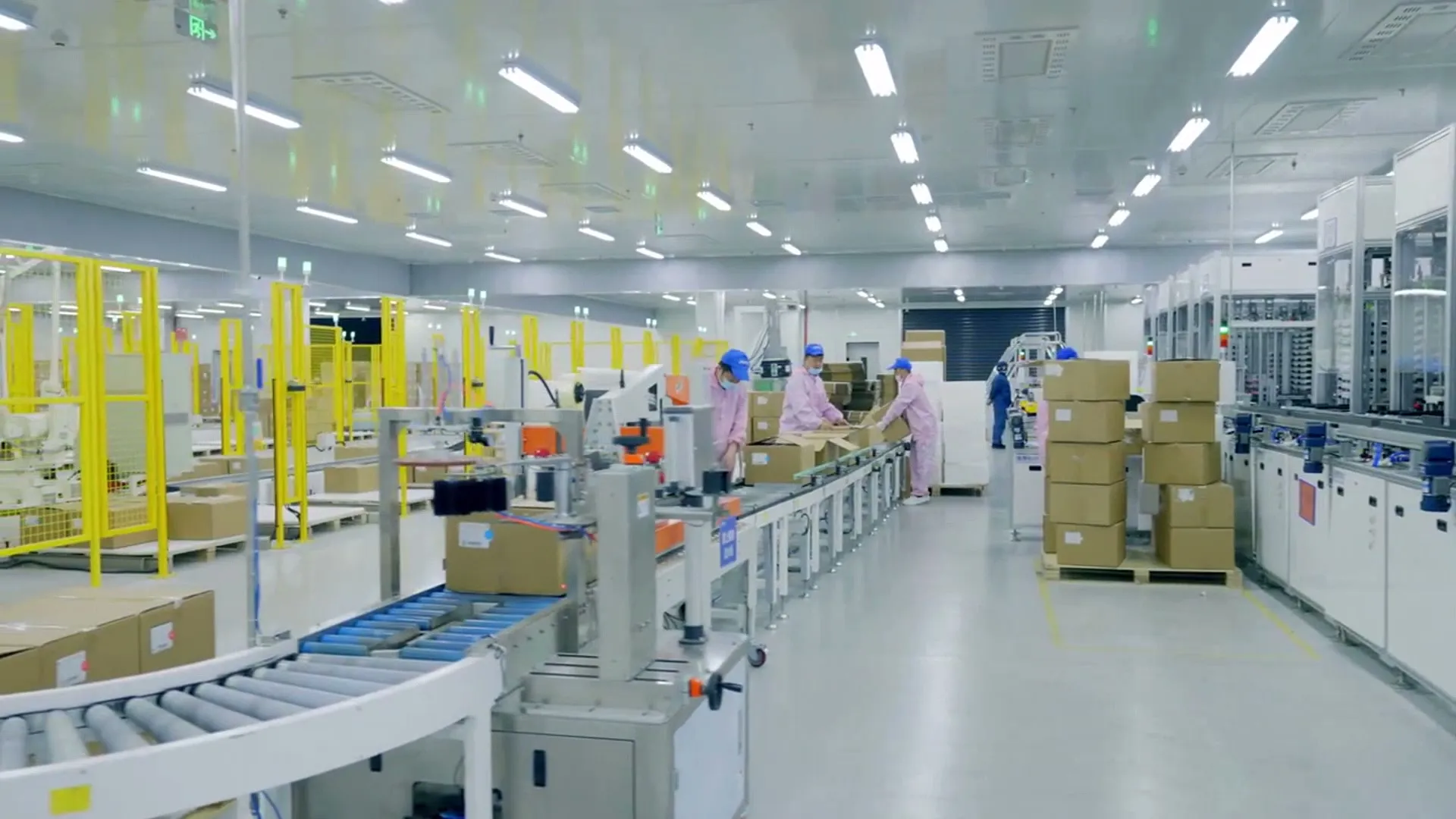 Figure 1: Visual detail and technical analysis corresponding to Theoretical Promise vs. Material Inertia.
Current lithium-ion batteries, with their liquid electrolyte, are an engineering marvel, but they have intrinsic limits. Their energy density, though improved, is finite. Dendrite formation during fast charging can puncture the separator, causing short circuits and, in the worst cases, thermal runaway fires. It’s a compromise between power, safety, and lifespan.
This is where solid-state comes in. By replacing the flammable liquid electrolyte with a solid material (polymeric, oxide, or sulfide), the risks of leakage are eliminated, and the door is opened to pure metallic lithium anodes. These anodes have a theoretical capacity of 3,860 mAh/g, ten times that of graphite, boosting energy density to unprecedented levels.
The key to ultra-fast charging lies in the ionic conductivity of the solid electrolyte. If lithium ions can move through the solid as efficiently as they do in a liquid, diffusion limitations are drastically reduced. This would allow charging rates of 5C or even 10C, meaning a 100 kWh battery could be charged in 12 or 6 minutes, respectively.
Theoretically, a solid-state battery could achieve energy densities of 400-500 Wh/kg or even more, compared to 250-300 Wh/kg for the best current lithium-ion batteries. This would directly translate into lighter vehicles with greater range or the same range with a much smaller and lighter battery pack, improving driving dynamics.
However, the reality is that perfect solid electrolytes are difficult to manufacture. The interface between the metallic lithium anode and the solid electrolyte is critical. Any microscopic irregularity can create hot spots or high-resistance zones, preventing efficient ion flow and reducing battery lifespan.
Furthermore, metallic lithium, by expanding and contracting during charge and discharge cycles, can exert considerable mechanical pressure on the solid electrolyte. This can lead to the formation of micro-fractures, compromising the cell’s integrity and performance in the long term. Mechanical stability is as crucial as ionic conductivity.
The potential of solid-state batteries is not limited to range alone. A lighter and more compact pack not only improves efficiency but also vehicle dynamics. A lower center of gravity and a reduction in unsprung mass are invaluable advantages for performance and driving experience, something ‘criteria-motor’ enthusiasts deeply appreciate.
The Alchemy of Materials and Scaled Manufacturing
 Figure 2: Visual detail and technical analysis corresponding to The Alchemy of Materials and Scaled Manufacturing.
Solid electrolytes are the heart of this technology. Among the most promising candidates are sulfides (like Li₆PS₅Cl), oxides (like LLZO), and polymers (like PEO). Each has its own advantages and disadvantages in terms of ionic conductivity, electrochemical stability, voltage window, and, crucially, ease of manufacturing.
Industrial-scale manufacturing is a monumental bottleneck. Sulfide electrolytes, for example, require processing in an inert atmosphere due to their reactivity with moisture, which exponentially increases production costs. Vacuum deposition techniques, essential for ultra-thin layers, are expensive and slow for mass production of large cells.
Major players like Toyota, QuantumScape (backed by Volkswagen), and Solid Power (with Ford and BMW) are investing billions. Toyota, a pioneer in research, focuses on sulfide electrolytes, promising prototypes by 2027. QuantumScape has demonstrated multi-layer cells with high energy density and promising cycle life in the laboratory.
But a laboratory cell of a few square millimeters is not a car battery pack. Scaling the production of solid electrolyte sheets, microns thick, with extreme uniformity and purity, to square kilometers of surface area is an unprecedented materials and process engineering challenge.
Cost is the elephant in the room. Raw materials for some solid electrolytes (e.g., germanium for LGPS) can be scarce and expensive. Manufacturing processes are inherently more complex and energy-intensive than those for lithium-ion batteries. It is estimated that the first solid-state batteries will be significantly more expensive per kWh.
Material purity is another obsession. Even minuscule traces of impurities can drastically degrade the performance and lifespan of a solid-state cell. Quality control must be millimeter-precise, from the synthesis of precursors to the final battery assembly, adding another layer of complexity and cost.
Integrating these new materials and processes into existing EV production lines will require massive investments and a complete re-engineering of the supply chain. It’s not just the battery; it’s the entire manufacturing ecosystem that must adapt to this new technology.
Vehicle Integration: Beyond the Cell
 Figure 3: Visual detail and technical analysis corresponding to Vehicle Integration: Beyond the Cell.
Let’s assume we have overcome the cell and manufacturing hurdles. The next challenge is integrating a solid-state pack into a vehicle. Although solid-state batteries promise less risk of thermal runaway, thermal management remains crucial. Internal resistance generates heat, and optimal performance requires keeping cells within a narrow temperature window.
Unlike liquid batteries, where the electrolyte can help dissipate heat, solid-state batteries rely entirely on external cooling systems. This implies sophisticated cooling plate design and precise temperature control to avoid hot spots that could degrade cells or affect the solid electrolyte’s conductivity.
Impact safety is paramount. While solid electrolytes are intrinsically safer against leakage and ignition, a severe impact could compromise the mechanical integrity of the cells, causing short circuits or structural failures. Packs must be designed to absorb energy and protect cells from extreme forces, without compromising lightness.
The battery management system (BMS) for solid-state will be even more complex. With metallic lithium anodes, precise monitoring of the state of charge (SoC) and state of health (SoH) is critical to prevent dendrite formation or irreversible degradation. Calibration and algorithms must be exquisite to maximize lifespan and safety.
Modularity and repairability are also key considerations. Solid-state battery packs, being potentially denser and more compact, could be more difficult to repair or replace in case of cell failure. The design must balance integration with the possibility of service throughout the vehicle’s lifespan.
And finally, charging infrastructure. While solid-state batteries promise ultra-fast charging, this will require ultra-high-power chargers (Megawatt Charging System - MCS) that are not yet widely available. The electrical grid will also need to be capable of supporting significant demand peaks if many vehicles charge simultaneously at these speeds.
The Economic Crucible and the Race of Giants
 Figure 4: Visual detail and technical analysis corresponding to The Economic Crucible and the Race of Giants.
The economic equation is the most unforgiving filter for any new automotive technology. It’s not enough for a solid-state battery to work in a lab; it must be producible at a cost that the mass market can bear. Automakers operate on tight margins and need supply and profitability guarantees before committing to mass scale.
The race for solid-state batteries is global, with Asia (especially Japan and China) leading in patents and development. Toyota, CATL, Samsung SDI, LG Energy Solution, and Panasonic are investing heavily. In the West, QuantumScape, Solid Power, and StoreDot are key players, often backed by strategic alliances with OEMs.
The supply chain is a complex puzzle. For metallic lithium, extraction and processing must scale dramatically. For sulfide electrolytes, the sulfur source is abundant, but purity and processing are critical. For oxides, the availability of elements like lanthanum or zirconium could be a limiting factor.
The cost per kWh of lithium-ion batteries has fallen by over 90% in the last decade, making EVs economically viable. Solid-state batteries, in their initial phase, will not be able to compete on price. The first products will likely be destined for premium, high-performance vehicles or niche applications where cost is secondary to energy density and safety.
Market analysts are cautious. While long-term projections are optimistic, most do not expect mass adoption before the end of the decade or even the beginning of the next. Manufacturing challenges and initial cost mean that “price parity” with lithium-ion batteries is many years away.
This means that, initially, solid-state batteries will be a luxury differentiator. Brands like Porsche or Mercedes-Benz could be the first to offer this technology in their highest-end models, justifying the additional cost with unparalleled performance and user experience.
Verdict and Strategic Lesson
The promise of 1,000 kilometers of range and 10-minute charging with solid-state batteries is not a fantasy. It is an achievable goal from a theoretical standpoint and, under certain laboratory conditions, already demonstrated. However, the path from a milligram in the lab to a megawatt-hour of mass production is an odyssey of engineering and economics.
Our verdict is clear: solid-state batteries are the next frontier, an inevitable and necessary evolution for electric mobility. But they are not a magic bullet just around the corner for the mass market. The challenges in materials, manufacturing complexity, thermal management at scale, and, above all, cost, are gigantic hurdles that still require years of R&D and billions in investment.
The first significant commercial applications in passenger vehicles will likely be seen by the end of this decade, and will be limited to high-value models. Mass adoption, where costs are competitive with current lithium-ion batteries, is a prospect for the 2030s. We cannot ignore the inertia of economies of scale and the maturity of lithium-ion technology.
The strategic lesson for automakers is twofold: invest aggressively in solid-state to secure a position in the next generation, but at the same time, continue to optimize and improve current lithium-ion batteries. The transition will be gradual, not a switch. The “chimera” will become reality, but patience and sustained investment will be the true keys to its success.
The future of electric mobility will undoubtedly be powered by solid-state. But the road to 1,000 km in 10 minutes is a marathon of science and engineering, not a marketing sprint. And at ‘criteria-motor’, we will follow every kilometer of this race.
🚗 Legal Notice & Automotive Technical Disclosure (Automotive Disclaimer):
The content presented in this article is for strictly informational, educational, and automotive technical analysis purposes. Range, energy consumption, power, recharging times, and mechanical specifications correspond to official homologation sheets and tests under standardized conditions. Actual performance may vary depending on driving habits, topography, ambient temperature, and vehicle condition. Always consult the manufacturer’s manual and the homologated technical specifications for your market.
📺 Watch the Video Analysis
If you prefer to consume this content in audiovisual format with dynamic tests, telemetry, and technical analysis, we invite you to watch our video on YouTube:
-> ▶️ Watch the full video on YouTube
¿Prefieres el análisis en formato audiovisual?
Pruebas a fondo, análisis técnico de ingeniería automotriz y comparativas sin concesiones cada semana.

About Julian Torres
Julian es un entusiasta de la movilidad y de la tecnología, vive la pasión por el campo y disfruta de la paz y la tranquilidad. Antes de ésto, fue Senior Engineer en IBM.
Artículos Relacionados
Ver todos ↗
Your Battery is Stealing €1,000: The Hidden Depreciation Secret 💸🔋
Under your vehicle's hood, a silent enemy is destroying its value: the battery. In this Criteria Motor technical analysis, we unveil the harsh reality of hidden depreciation caused by a poorly maintained battery. We compare robust LFP...

Kia EV3: The Phantom Range and Hidden Flaws Nobody Tells You About 👻🔋
The Kia EV3 promises an astonishing 600-kilometer WLTP range, but this video uncovers the uncomfortable truth on the road. We dive deep into why its real-world range often falls short, revealing a significant drop of over 30% at highway speeds.